
Fear of cardiac disease progression and event recurrence
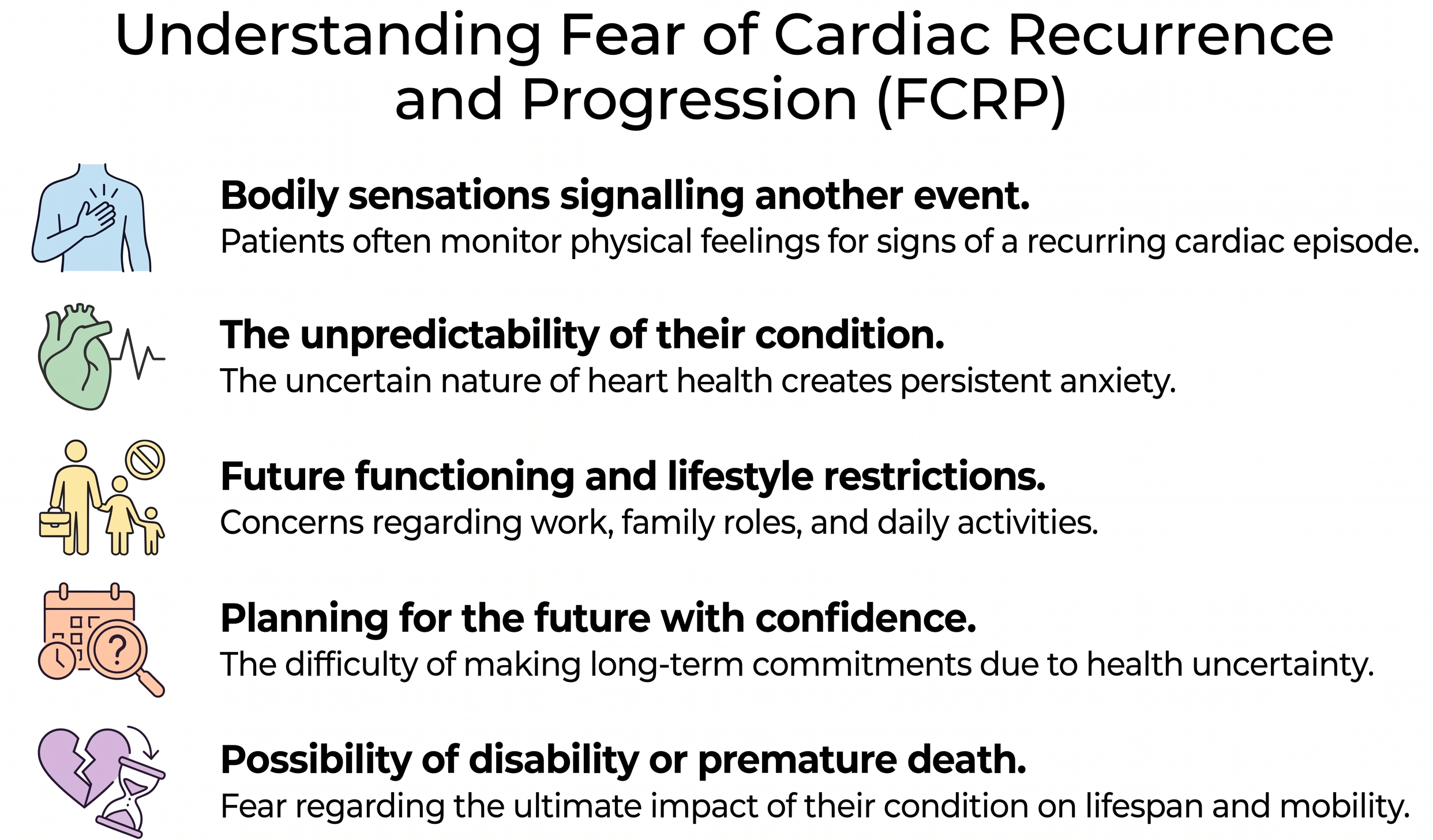
Fear of cardiac recurrence and progression (FoRP) refers to the ongoing worry, concern, or anxiety that a heart condition will either return (recurrence) or worsen over time (progression). It is increasingly recognized as an important aspect of psychological recovery after a cardiac event. The two components are related but distinct:
Fear of cardiac recurrence is fear that another cardiac event will occur, such as another heart attack, cardiac arrest, or SCAD.
Fear of cardiac progression is fear that the underlying heart condition will deteriorate, leading to worsening symptoms, disability, loss of independence, treatment burden, or reduced life expectancy.
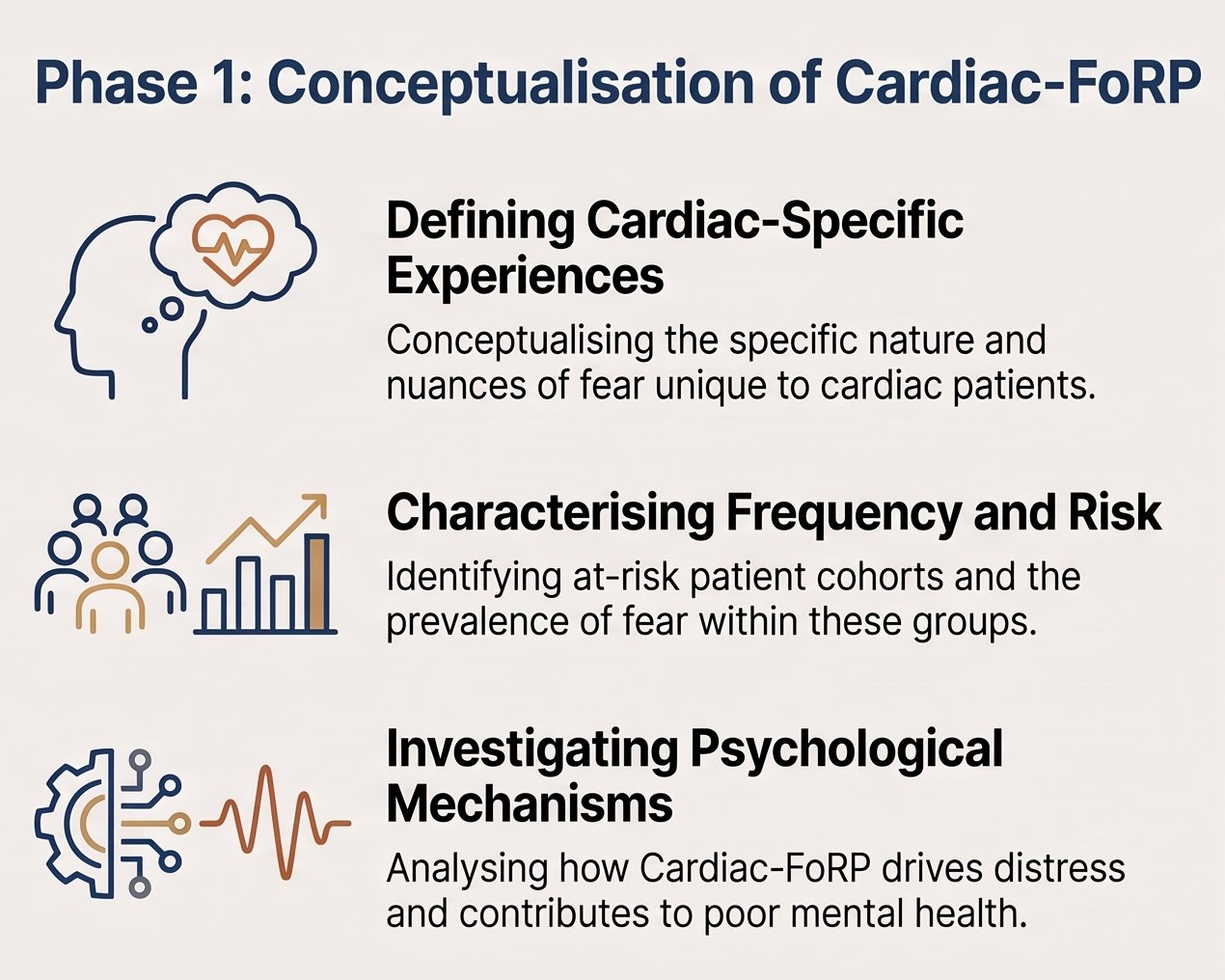
Phase 1: Conceptualising Cardiac-FoRP
Initial work began with conceptualising FoRP within a cardiac specific context and providing initial prevalence estimates. The conceptual framework identified fears related to cardiac illness recurrence and progression—such as concerns about death, health deterioration, and interpersonal impacts—and associated behavioural responses, such as avoidance and hyperawareness. Around one around one in two cardiac patients were found to endorse these fear-related experiences, often with associated distress.
Our more recent work extended this conceptualization by identifying high, moderate, and low cardiac-FoRP subgroups, and highlighted key psychosocial and demographic risk factors for higher FoRP, including younger age, comorbid health conditions, and increased cardiac distress and illness uncertainty.
The development of this valid and reliable inventory was critical to facilitate comprehensive research into the construct and to allow FoRP concerns to be addressed in cardiac care settings. Using the FCRPI, health professionals can identify and characterise fears relating to disease progression, recurrence, and related consequences in cardiac patients, thereby facilitating referral to and delivery of targeted psychotherapeutic interventions to support cardiac patient recovery.
Importantly, FoRP exists on a continuum. Some level of concern is a normal and often adaptive response to living with heart disease because it can motivate appropriate self-monitoring and adherence to treatment. However, when fears become persistent, intrusive, disproportionate, or lead to avoidance, hypervigilance, repeated reassurance-seeking, or significant distress, they may interfere with psychological adjustment and quality of life. While FoRP has been extensively researched among chronic illness cohorts, particularly with cancer patients, research into FCRP is in its infancy. For the past four years we have been undertaking a program of research to conceptualise and measure cardiac-FoRP, led by Dr Sarah Clarke.
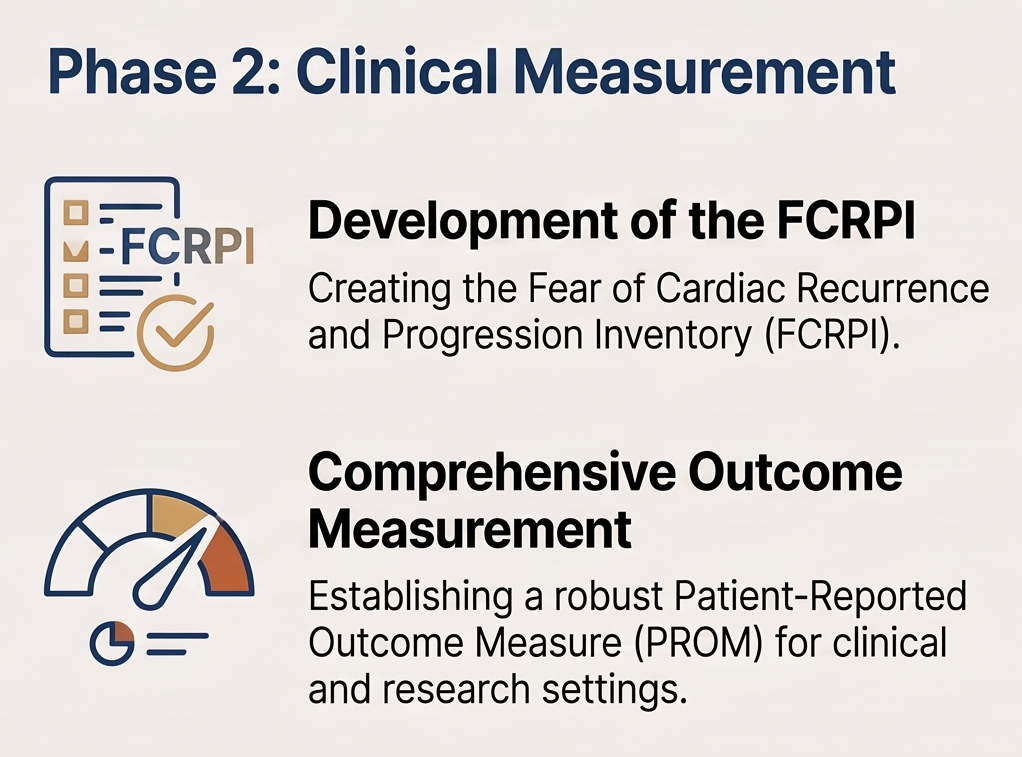
Phase 2: Measuring Cardiac-FoRP
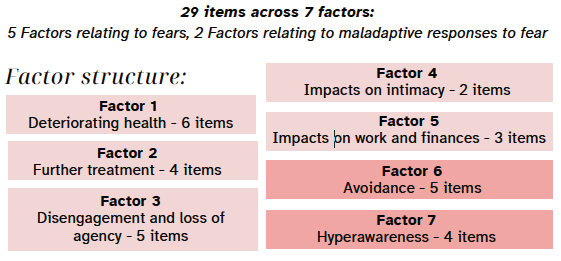
In order to fill a gap in the cardiac-FoRP literature, we then developed a cardiac-specific measure FoRP – the Fear of Cardiac Recurrence and Progression Inventory (FCRPI). The FCRPI comprises 29 items across seven factors and assesses both the key fear domains (Factors 1-5) and the maladaptive responses to fear (Factors 6 & 7).
Publications relating to Fear of Cardiac Recurrence and Progression
1. Clarke ST, Murphy BM, Le Grande MR, Rogerson MC, Kovacic JC, Hesselson S, Iismaa SE, Graham RM, Hester R, Jackson AC. The Impact of Fear of Recurrence and Progression on Mental Health after Spontaneous Coronary Artery Dissection: The Role of Illness Uncertainty. European Journal of Cardiovascular Nursing. 2026. https://doi.org/10.1093/eurjcn/zvag090
2. Clarke ST, Le Grande MR, Murphy BM, Hester R, Jackson AC. The Development and Validation of a Clinical Measurement Tool for Fear of Disease Progression and Recurrence in Cardiac Patients. Scientific Reports 2026. https://doi.org/10.1038/s41598-026-40353-5
3. Clarke ST, Murphy BM, Hester R, Jackson AC. Fear of Progression and Recurrence in People with Heart Disease: Risk Factors and Implications for Emotional Support. Behavioral Sciences, 2025; 15(4), 479. https://doi.org/10.3390/bs15040479
4. Clarke ST, Murphy BM, Rogerson M, Grande ML, Hester R, Jackson AC. Conceptualizing Fear of Progression in Cardiac Patients: Advancing our Understanding of the Psychological Impact of Cardiac Illness. Heart and Mind. 2024;8(1).
5. Clarke ST, Murphy BM, Rogerson M, Grande ML, Hester R, Jackson AC. Protocol for the development and validation of a clinical measurement tool for fear of disease progression and recurrence in cardiac patients. Chronic Diseases and Translational Medicine. 2024; 1-10, doi: 10.1002/cdt3.115
6. Clarke ST, Murphy BM, Hester R, Jackson AC. How does illness uncertainty impact cardiac patient recovery? British Journal of Cardiovascular Nursing 2022.https://doi. org/10.12968/bjca.2022.0102